
The tech conference forgot the humans
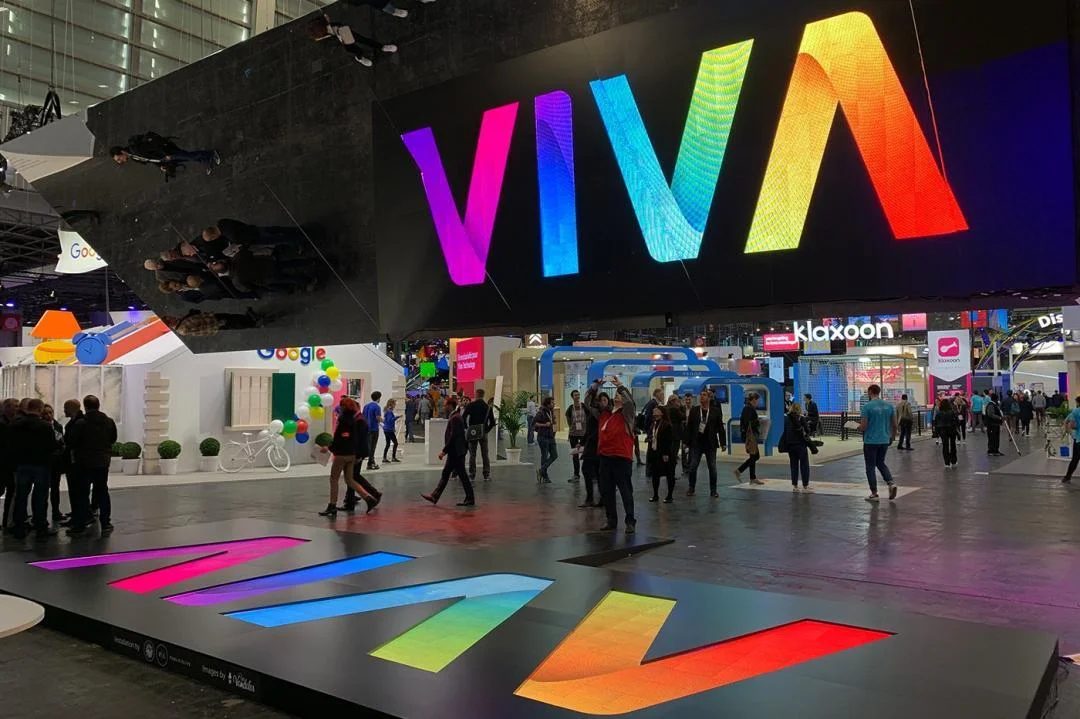
From the Floor at VivaTech
The Missing Link… Hiring!
VivaTech was a playground of technology. Established companies from banks to beauty brands to large consulting firms filled the main halls. Two floors of startups were organized by country and region — hardware, software, prop tech, ag tech, nutrition, apparel tech. There was something for everyone who thinks about what's next.
What was missing: a serious conversation about how you get there.
Panel after panel mapped the future. Very few stopped to ask who's going to build it, how you find them, and what you do with them once they're on your team. AI is radically sweeping through the work landscape right now. The hiring conversation needs to catch up.
Of the 4,500 exhibitors, I only saw a few related to talent:
- LinkedIn hosted a panel on AI-powered hiring.
- Deel and Pebl (two employer-of-record companies) were on the floor for companies navigating international employment.
- I-Oasis had an interesting product for VR-based onboarding.
- Pick Jobs, a Croatia-based job board, has built in AI-powered interviewing.
- Malt, Europe's top contractor marketplace, ran a jobseeker workshop: "What AI means for how we hire and who gets ahead."
One standout for me was BorderPass, a Canadian legal platform for all visa types into Canada, from employees to entrepreneurs to students and refugees. They're AI-native, and according to Dan Weber on their team, BorderPass now files more visas than any other firm in Canada. If you're hiring for Canada, they're worth a look.
The gap at VivaTech wasn't a criticism of the organizers. It was a signal. The industry is building fast. The hiring and people infrastructure hasn't kept up. That's the conversation we need to be having.
Highlights
Data sovereignty was the dominant theme on the main stages.
European and global companies want control over where their data lives — and who can access it. Sovereign data, sovereign cloud, sovereign AI. It came up in almost every major panel. Two companies on the floor were building directly into this space: Nebula Block out of Canada and Infercom out of Luxembourg. Worth watching if you're building in regulated industries or work across jurisdictions.
The startup floors were worth slowing down for.
Countries showed up to attract talent and investment — not just to demonstrate technology. Luxembourg had some of the most informative country representatives I spoke with. Canada had a strong presence too, and I came away genuinely excited about what's being built there. If you haven't paid attention to the Canadian tech ecosystem lately, now is a good time to start.
The company I can't stop thinking about is Reveal Life Sciences.
Based in Canada, they've built a real-time molecular signal for cancer detection that lets surgeons know exactly when they've reached the boundary of cancerous tissue — removing the need to wait on delayed labs and reducing the risk of incomplete removal. Most of us know someone who's been through that second surgery. This technology changes that. revealsurgical.com
Beyond the deep tech, the conference floor showed just how broad the innovation landscape has become.
Ag tech and nutrition technology sat alongside apparel innovation and prop tech. The companies that caught my eye weren't necessarily the loudest — they were the ones solving problems that were obvious once you saw them.
Robots. Robots. And more Robots.


Money Money Money
Only 1 in 6 seed-stage companies makes it to Series A — and the funnel is narrowing.
That figure came from the stage during the AI Fundability panel, and it landed quietly in a room full of founders. The ones who make it, the panel agreed, aren't necessarily the ones with the best technology. VCs are looking now for strong leadership, brand recognition, and adaptability more than ever before.
The biggest shift in pricing is happening right now.
Investors at VivaTech flagged a major transition from seat-based SaaS pricing to usage-based models — and said the biggest market opportunity today is pairing product with implementation: not just "here's the technology," but "here's our team to train yours." Those with seat-based pricing are selling into a market wanting shorter contracts.
Cold outreach to VCs is nearly dead, especially if you’re not confident in your numbers
Warm introductions through mutual connections are now table stakes. One panelist put it simply — you're never too bold for an ambitious funder. Lead with the ambitious statement and ask for the right amount. Asking for too little signals you don't understand what you're building.
AI is changing go-to-market faster than most founders are tracking.
Investors said they're looking for founders who are ahead of the technology, not catching up to it — especially as sales motions and GTM strategy shift in real time.
What Investors Are Actually Looking For
Notes from the AI Fundability Stack panel at VivaTech 2026 — and what it means for how you build your team.
There were a lot of panels at VivaTech about AI. Most of them covered the expected ground: models, infrastructure, adoption curves. The one that stuck with me was a conversation between three investors—Boris Golden of Partech, Elise Stern of Eurazeo, and Léa Verdillon of Algaé Ventures (moderated by Agnès Seurat of AWS)—about what actually separates a $50M Series A from a company that stays stuck at seed.
Their answers weren't primarily about technology.
The moat has shifted
One year ago, if you were to ask most founders what their competitive moat is and they would have told you about their model, their tech stack, or their proprietary algorithm. The investors on this panel told a different story.
Elise Stern, who is invested across more than 400 companies, argued that in the AI value chain, infrastructure is the real moat, but most startups can't compete there. What they can compete on is contextual data: access to information that isn't widely available, and that creates a meaningful advantage in a specific domain.
The second moat she named surprised me more: brand. Not awareness for its own sake, but the kind of loyalty that makes customers stay even when a competing technology arrives. The pain of switching, she argued, is a strategic asset if you've built trust, iterated fast, and invested in customer service and marketing.
Boris Golden added a third: adoption itself. If your product is deeply embedded in how a team works, that integration becomes the moat. It's not about being irreplaceable in theory. It's about being genuinely embedded in practice.
What investors are actually looking for in founders
Léa Verdillon's fund has shifted its timing: investing a little later than before, specifically to understand whether real customer traction and trust have developed. The bar isn't just "does this work." It's "do customers actually rely on it."
But the more interesting insight from her was about founder profile. She's looking for well-rounded founders. Technical depth still matters, but go-to-market and sales are changing too fast for a purely technical leader to navigate alone. The founders she wants to back are ahead of the technology, not catching up to it. And they understand that building a company means building across functions, not just building a product.
Elise made this point even more directly: the founders who struggle most are often the ones who pour everything into engineering and technology while treating marketing, HR, and operations as secondary problems. These functions, she said, also require high-caliber talent. Founders who respect that—who treat their business partners with the same rigor they apply to their technical hires—build companies that survive the transitions.
It's a point I've seen play out dozens of times. The companies that get stuck aren't usually stuck because their product isn't good enough. They're stuck because they built unevenly.
A note on what this means for non-technical talent
It's hard to have this conversation without mentioning Daniela Amodei, who co-founded Anthropic with her brother Dario. Her background isn't engineering, it's literature, risk management, and HR. A recent piece in Fortune makes the case that her non-technical background has been a meaningful part of what's driven Anthropic to where it is today.
The panelists at VivaTech were making a version of the same argument. The companies getting funded aren't just the ones with the best models. They're the ones with the clearest understanding of their customers, the strongest brand instincts, and the organizational maturity to execute across functions, more than just ship features.
What this means if you're hiring right now
If your moat is brand and customer loyalty, you need marketing and customer success hires who are as strong as your engineers. If your moat is contextual data, you need someone who understands data strategy, not just data infrastructure. If your moat is adoption, you need implementation and onboarding to be exceptional — which is a people and process problem as much as a product one.
And if you're preparing to raise, the panel was clear: investors are looking for founders who know what they're building, who they need to build it, and what it will actually cost. The ones who show up with that clarity (and with a team that reflects it) are the ones making it to Series A.
The technology is table stakes. What separates the companies getting funded is everything built around it.


